Sass Lighting Sass Lighting

Top Low Heat Light Bulbs for Enclosed Fixtures

Time:2026-11-20 Author:Oliver
0%

Choosing a bulb for a covered ceiling light is not just about brightness. Enclosed fixtures hold heat around the bulb, which can affect performance and lifespan. LEDs generally use less energy than incandescent bulbs, but they still produce heat at their base. “Low heat” does not mean “no heat.” Check the bulb’s packaging for explicit approval for enclosed fixtures, and follow the fixture maker’s guidance.

How to choose low-heat light bulbs for enclosed fixtures depends on fit, light output, and operating conditions. Match the bulb’s base and shape to the socket, then compare lumens rather than watts for brightness. A compact LED may fit a glass dome, while a larger bulb could sit too close to the cover. Check dimmer compatibility if the light is on a dimmer. Small details matter. A bulb not rated for enclosed use may overheat even if its wattage seems modest. Look for clear product specifications from the manufacturer, and avoid relying on vague “cool-running” claims alone. If the fixture feels unusually hot, flickers, or repeatedly burns through bulbs, switch it off and review the fixture and bulb instructions. One limitation is easy to miss: even a suitable LED can run warm in a tightly sealed fitting. The right choice is the one that meets the fixture’s requirements, fits with room to spare, and gives comfortable light.
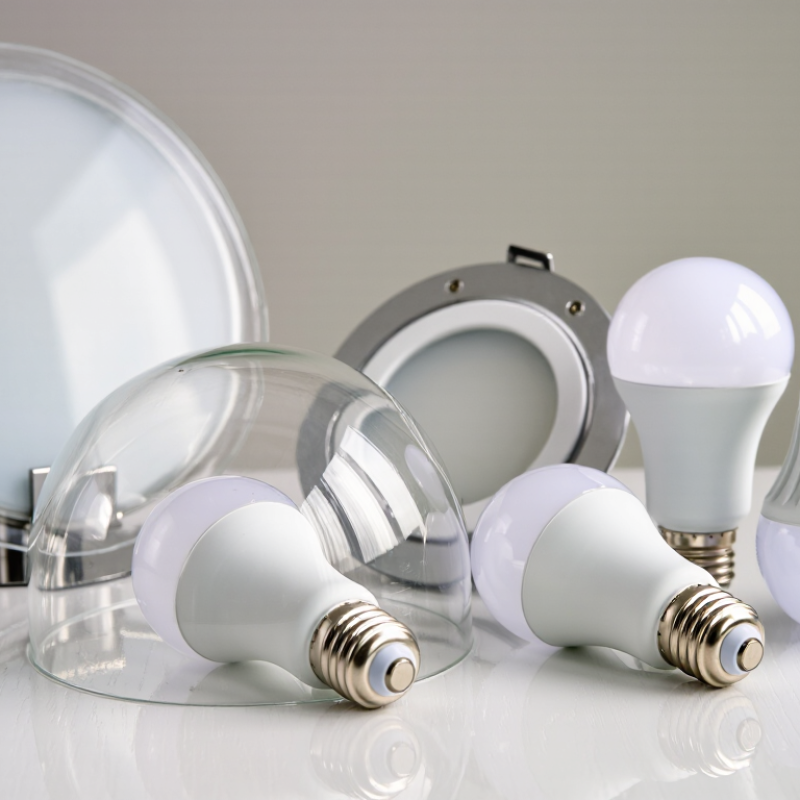
Top Low Heat Light Bulbs for Enclosed Fixtures

Understanding Enclosed Fixtures and Their Heat Challenges

Enclosed fixtures trap warm air around the bulb, especially when a glass dome or tight shade limits circulation. A bulb may look cool from below while its base and electronics run hot inside. That heat can shorten bulb life or cause flickering. It matters.

When choosing a low-heat bulb, check that its packaging explicitly allows use in enclosed fixtures. LED bulbs usually use less power than comparable incandescent bulbs, but they still produce heat at the base. “Low wattage” alone is not enough; compare the bulb’s actual wattage with the fixture’s rating, and check its shape and length before buying. A bulb that touches the cover may have little room to shed heat.

I’ve found that fixture labels are easy to overlook, and that is where a quick check helps. If the fixture is dimmable, confirm the bulb supports the dimmer; otherwise, uneven light or flicker may follow. Keep the glass cover clean, too, since dust can make heat buildup harder to notice. Even a suitable bulb can behave differently in a cramped fixture, so monitor it during early use. If it repeatedly flickers, smells unusual, or discolors the socket, switch it off and have the fixture checked.

How Light Bulb Design Affects Heat Output

Top Low Heat Light Bulbs for Enclosed Fixtures

How Light Bulb Design Affects Heat Output

Heat depends on more than a bulb’s wattage. An LED chip produces light, while much of its remaining energy becomes heat near the chip. The U.S. Department of Energy’s Energy Saver guidance says LEDs use up to 90% less energy than incandescent bulbs. That comparison is useful, but it does not mean a closed fixture stays cool. Heat still needs a path out.

Look at the bulb’s thermal design. A broad metal heat spreader can move warmth away from the LED chip; a cramped housing may slow that transfer. The DOE’s Solid-State Lighting: LED Basics explains that LEDs need effective heat management to maintain performance. Driver electronics matter, too, because they also generate heat inside the base. Small details count. In a ceiling dome, trapped warm air can build around the bulb, even when the room feels comfortable.

Match the bulb to the fixture, not just the socket. Check the packaging for explicit enclosed-fixture suitability and follow its wattage guidance. Higher light output in a compact bulb can place more demand on its thermal path. I have found this easy to overlook: a bulb can feel cool at the diffuser while its internal components run hot. That is not a perfect test. When the fixture’s limits are unclear, choose a lower-output option rated for enclosed use.

Types of Low-Heat Bulbs for Enclosed Fixtures

LED bulbs are usually the strongest low-heat choice for enclosed fixtures. They convert more electricity into light and less into waste heat than incandescent bulbs. The U.S. Department of Energy’s Energy Saver guidance says LEDs use at least 75% less energy and can last up to 25 times longer than incandescent lighting. That is useful in a glass dome where warm air has little room to escape. Still, an LED’s driver can overheat in a tight enclosure. Check the packaging for an explicit enclosed-fixture rating; “LED” alone is not enough.

Compact fluorescent lamps, or CFLs, are another lower-heat option compared with incandescent bulbs. Their coiled tubes may fit older sockets, but trapped heat can shorten service life, so choose only a model approved for enclosed use. LED designs also vary: some use a broad plastic diffuser, while others expose filament-style elements. The shape affects light distribution, not whether the bulb tolerates an enclosed fixture. ENERGY STAR’s lighting guidance favors efficient LED products, but a certification does not replace checking the fixture rating. I have seen compact shades run surprisingly warm; the label is easy to overlook.

Top Low Heat Light Bulbs for Enclosed Fixtures — Types of Low-Heat Bulbs for Enclosed Fixtures
LEDs generally release less heat into a room than incandescent bulbs at comparable light output. For enclosed fixtures, choose a bulb explicitly rated for enclosed use and follow the fixture’s maximum-wattage and compatibility instructions.
Bulb Type Common Shape or Base Typical Power for About 800 Lumens Heat and Efficiency Notes Enclosed-Fixture Suitability What to Check
Enclosed-fixture-rated LED A19; commonly E26 or E27 base About 8–12 W Usually uses substantially less power than an incandescent bulb for similar light output. The bulb still produces heat, particularly at its electronics and base. Best general-purpose choice when the packaging or manufacturer’s specifications explicitly permit enclosed-fixture use. Verify the enclosed-fixture rating, lumen output, base size, and fixture wattage limit.
Enclosed-fixture-rated LED reflector bulb BR30 or PAR30; often E26 or E27 base Often about 9–14 W Directional light can suit recessed cans and track-style applications. Actual power depends on beam angle and light output. Suitable only when the specific model is rated for enclosed fixtures and the fixture supports its shape and size. Check the bulb’s diameter, length, beam angle, dimmer compatibility, and enclosed-use rating.
Enclosed-fixture-rated LED candle bulb B10 or B11; commonly E12 base Often about 7–10 W Low-power LED options are available for chandeliers and decorative fixtures. Small bulbs can still retain heat inside a tight enclosure. Use in enclosed shades only when the bulb is specifically rated for that use. Confirm the base, bulb dimensions, shade clearance, and enclosed-fixture rating.
Enclosed-fixture-rated LED tube or compact LED replacement Shape and base vary by fixture Varies widely by length and light output LED replacements can reduce power use compared with older fluorescent lamps, but fit and electrical compatibility are product-specific. Use only a replacement approved for the fixture and its enclosure; some enclosed or sealed housings are not suitable. Check the fixture instructions, lamp dimensions, ballast or driver requirements, and enclosed-use rating.
Compact fluorescent (CFL) Spiral or covered; commonly E26 or E27 base Often about 13–15 W Typically uses less power than an incandescent bulb for similar light output, but it can run hot and its life may be reduced by trapped heat. Do not assume it is suitable. Use only if the specific CFL is marked for enclosed fixtures. Check the product label and fixture instructions; some CFLs also require specific operating positions.
Incandescent or halogen Many shapes and bases Often about 40–60 W for roughly 400–800 lumens, depending on type Much of the electrical energy is emitted as heat rather than visible light compared with an LED of similar light output. Generally a poor low-heat choice for enclosed fixtures; use only when the fixture explicitly permits the lamp and its wattage. Follow the fixture’s maximum wattage and clearance requirements. Halogen bulbs can become especially hot.
Important: “LED” alone does not guarantee enclosed-fixture suitability. Enclosed housings can trap heat and shorten bulb life. Check the exact bulb’s packaging or specifications, and never exceed the fixture’s stated limits. Typical wattage figures are approximate; actual values vary by model and light output.

Choosing Bulbs by Fit, Brightness, and Fixture Rating

Top Low Heat Light Bulbs for Enclosed Fixtures

Choosing bulbs by fit, brightness, and fixture rating helps avoid poor performance in enclosed fixtures. Check the bulb’s base, shape, and length against the fixture; a bulb that touches the cover may trap more heat. Then read the fixture label and choose a bulb specifically rated for enclosed use. LEDs generally produce less heat than incandescent bulbs, but trapped heat can still shorten their life. Small details matter.

Brightness is measured in lumens, not watts. For a familiar reference, about 800 lumens is similar to the output of a traditional 60-watt incandescent bulb. The U.S. Department of Energy’s LED lighting guidance reports that LEDs use at least 75% less energy and can last up to 25 times longer than incandescent lighting. Those figures are broad comparisons, not a guarantee for every enclosed fixture. Check the bulb’s packaging and the fixture instructions; actual results depend on airflow and operating conditions.

Tips: Match the bulb’s shape and base before shopping. Confirm “suitable for enclosed fixtures” on the packaging, and stay within the fixture’s rating. Choose lumens for the room, not wattage alone. One caveat: labels can be easy to overlook, especially inside a dusty ceiling fixture.

Top Low-Heat Light Bulbs for Enclosed Fixtures

Compare representative power use at similar light output. Lower-wattage LEDs generally release less heat into a fixture than incandescent bulbs, but not every LED is rated for enclosed fixtures.

Values are representative examples; actual bulb wattage and brightness vary by product. Check the fixture’s limits and choose a bulb explicitly rated for enclosed fixtures when required.

Safe Installation and Use of Low-Heat Bulbs

Safe Installation and Use of Low-Heat Bulbs

For enclosed fixtures, “low heat” does not mean heat-free. LEDs use less electricity than incandescent bulbs and generally release less heat, but their drivers still warm up. The U.S. Department of Energy reports that LEDs use at least 75% less energy and last up to 25 times longer than incandescent lighting (Energy Saver, “LED Lighting”). These are general comparisons, not a promise that every LED suits every sealed fixture. Heat still matters.

Before installation, switch off the fixture and let the old bulb cool. Check the fixture label and bulb packaging for enclosed-fixture approval, maximum wattage, and size. A bulb that fits the socket may still be too long or too wide for the housing. Check the label. Avoid forcing the bulb or touching its contacts, and stop if the socket looks cracked or scorched. The DOE’s LED guidance also notes that heat management affects performance and lifespan; trapped heat can shorten a bulb’s service life.

After fitting, turn the light on and watch for flickering, unusual odor, or discoloration around the trim. Switch it off if anything seems wrong. Dust and tight housings can make heat harder to notice, and a quick check cannot reveal every problem. That detail is easy to overlook. Recheck the fixture after several hours of use, especially when replacing a bulb in a small, tightly enclosed ceiling fitting.

FAQS

Why can enclosed fixtures make bulbs run hot?

Glass domes and tight shades trap warm air around the bulb. The base and electronics may heat up even when the bulb looks cool.

Are LED bulbs always safe for enclosed fixtures?

No. LEDs usually use less energy than incandescent bulbs, but their internal drivers can still overheat in cramped spaces. Check for an explicit enclosed-fixture rating.

Is a low-wattage bulb enough?

Not by itself. Compare the bulb’s wattage with the fixture’s rating, and check the bulb’s size and shape. Fit matters.

How can I tell if a bulb will fit?

Check its base, length, and shape before buying. A bulb that touches the glass cover has less room to release heat.

How should I choose the right brightness?

Compare lumens, not watts. About 800 lumens gives light similar to a traditional 60-watt incandescent bulb.

Can compact fluorescent bulbs work in enclosed fixtures?

Some can, but choose only a model specifically rated for enclosed use. Trapped heat may shorten its service life.

What if my fixture has a dimmer?

Confirm that the bulb supports dimming. Otherwise, the light may flicker or appear uneven.

What should I do if the bulb flickers or the socket changes color?

Switch it off and have the fixture checked. An unusual smell is another warning sign. Don’t ignore it.

Does cleaning the fixture help?

Yes. Dust on a glass cover can make heat buildup harder to notice. I admit, I sometimes overlook that label.

Conclusion

Enclosed fixtures trap heat, which can shorten a bulb’s life or create unsafe operating conditions when the bulb is not designed for that environment. This guide explains how bulb construction and technology influence heat output, and compares suitable options such as LEDs and other efficient bulb types. While low-heat bulbs generally release less heat into the surrounding fixture than less efficient alternatives, they still generate warmth and should be chosen according to the fixture’s requirements.

Learn How to choose low-heat light bulbs for enclosed fixtures by checking the fixture rating, bulb shape, base, size, and available clearance. Match brightness to the room’s needs and confirm that the bulb is approved for enclosed use; a low-wattage or LED label alone does not guarantee compatibility. The guide also covers safe installation and use, including switching off power before replacing a bulb, following the fixture and bulb instructions, and avoiding overcrowding or use beyond the stated limits.

Oliver

Oliver

Oliver is a seasoned marketing professional with a wealth of expertise in driving brand awareness and engagement. With a deep understanding of our company's product offerings, he consistently delivers high-quality content that enriches our professional blog. His insights not only shed light on......