When it comes to outdoor lighting, choosing the right bulbs is crucial. The right light bulbs can transform your outdoor spaces, offering both safety and aesthetic appeal. As lighting expert Sarah Turner emphasizes, "Selecting the right outdoor bulbs is about balancing function with style."
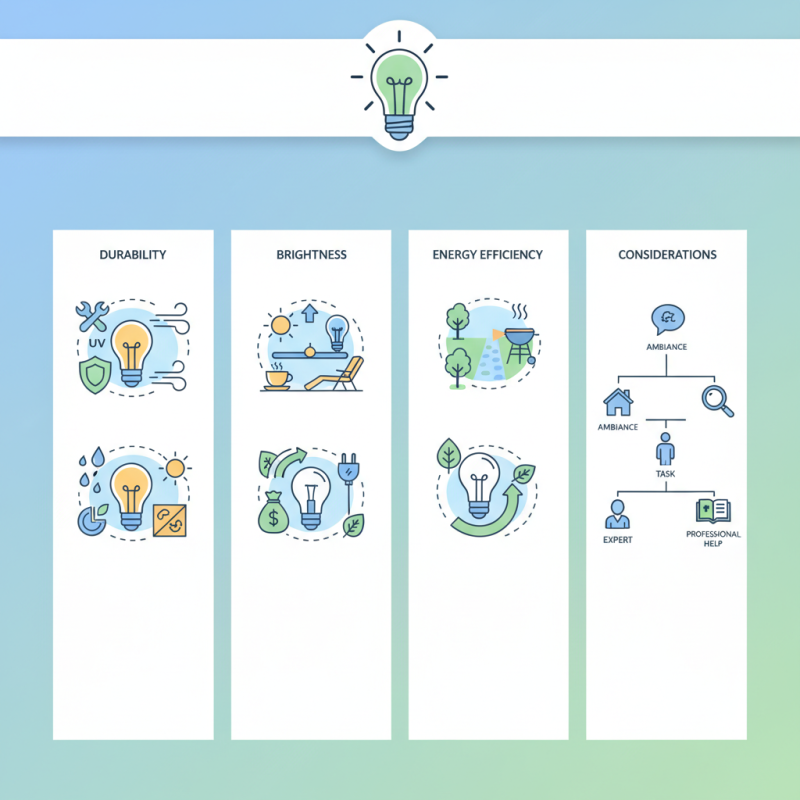
Understanding how to choose light bulbs for outdoor use involves considering durability, brightness, and energy efficiency. Many consumers overlook the importance of weather resistance and UV protection when making their choices. The right bulb should not only illuminate your patio but also withstand elements like rain and winds.
If you're unsure about which type of bulb to select, start by evaluating your lighting needs. Consider the ambiance you want to create. Are you looking for bright task lighting or soft ambient light? Reflect on these questions to guide your choices. Making informed decisions can be daunting, so it's wise to consult resources or professionals who specialize in outdoor lighting.
Understanding Different Types of Outdoor Light Bulbs Available
When selecting outdoor light bulbs, it's essential to know the various types available. LED bulbs remain the leading choice for outdoor illumination. According to the U.S. Department of Energy, LEDs consume at least 75% less energy than incandescent bulbs. This incredible efficiency translates to lower electricity bills and a reduced carbon footprint. Additionally, LED lights can last up to 25,000 hours, offering a remarkable lifespan compared to traditional options.
Incandescent bulbs, while cheaper upfront, struggle to compete. They produce more heat and last significantly shorter, approximately 1,000 hours. Fluorescent bulbs are another option, but they can be sensitive to cold weather. They may flicker or take longer to warm up outdoors in winter conditions. Understanding these characteristics is important, as using the wrong bulb can lead to inadequate lighting and intermittent failures.
Solar-powered lights are gaining popularity, with a growing market demand noted by Grand View Research, which predicts significant growth. However, their performance can vary widely based on daylight availability. Users must consider their specific outdoor environment to assess solar efficiency. Each outdoor lighting solution has its pros and cons, making careful consideration critical for achieving desired functionality and aesthetics.
Top 10 Outdoor Light Bulb Types Overview
Evaluating Brightness and Color Temperature for Outdoor Spaces
When selecting outdoor light bulbs, evaluating brightness and color temperature is essential. Brightness is measured in lumens. The more lumens, the brighter the light. For outdoor spaces, aim for bulbs with at least 800 lumens for general lighting. However, for areas requiring task lighting, 1,600 to 2,200 lumens are ideal.
Color temperature, measured in Kelvins, influences the ambiance of your space. Warmer tones, around 2700K to 3000K, create a cozy atmosphere. In contrast, cooler tones, such as 4000K and above, produce a daylight effect that may enhance security. Research by the Lighting Research Center shows that cooler temperatures can improve visibility at night, which is essential for safety in outdoor areas.
Tip: Consider using adjustable lights. This flexibility allows you to adapt brightness based on your needs. Experiment with different bulbs to find the right balance. If something feels off, don’t hesitate to reevaluate your choices. Sometimes, a minor adjustment can make a significant difference in your outdoor setting. Always remember that the goal is to create a welcoming space while ensuring safety and functionality.
Top 10 Tips for Choosing Outdoor Light Bulbs for Your Needs - Evaluating Brightness and Color Temperature for Outdoor Spaces
| Tip Number |
Tip |
Recommended Brightness (Lumens) |
Color Temperature (Kelvin) |
| 1 |
Assess the space size |
700 - 1000 |
3000K - Warm White |
| 2 |
Consider the purpose of lighting |
800 - 1200 |
4000K - Neutral White |
| 3 |
Choose LED for energy efficiency |
600 - 900 |
5000K - Daylight |
| 4 |
Evaluate outdoor conditions |
700 - 1100 |
2700K - Soft White |
| 5 |
Check for weather resistance |
800 - 1500 |
3000K - Warm White |
| 6 |
Focus on dimming options |
500 - 1000 |
3500K - Neutral White |
| 7 |
Match color with surroundings |
600 - 1200 |
4000K - Natural White |
| 8 |
Consider lifespan of bulbs |
800 - 1300 |
5000K - Daylight |
| 9 |
Evaluate installation requirements |
700 - 1200 |
3000K - Warm White |
| 10 |
Look for energy certifications |
800 - 1400 |
4000K - Neutral White |
Assessing Energy Efficiency and Lifespan of Light Bulbs
When selecting outdoor light bulbs, energy efficiency and lifespan are crucial factors. According to the U.S. Department of Energy, LED bulbs use at least 75% less energy than incandescent bulbs. This significant reduction leads to lower energy bills. Moreover, LEDs typically last up to 25,000 hours, far surpassing the 1,000-hour lifespan of traditional bulbs. This longevity means fewer replacements, which can save both time and resources.
However, it's important to assess your specific needs. Not all LEDs are created equal. Some may emit harsh light or inadequate brightness levels, impacting usability in outdoor settings. Understanding lumens and color temperature is essential. A bright 800-lumen bulb may seem ideal, but if it casts a cold light, it could create an unwelcoming atmosphere. Balancing brightness with warmth can enhance outdoor spaces effectively.
Lastly, consider the upfront costs against long-term savings. While LEDs may cost more initially, the savings over time can be significant. However, a cheap bulb with a short lifespan can lead to unexpected expenses. As energy-efficient options evolve, staying informed about products and their lifecycle is vital. This approach ensures you make choices that align with both environmental and financial goals.
Considering Weather Resistance and Durability for Outdoor Use
When selecting outdoor light bulbs, weather resistance and durability are critical factors. According to the National Electrical Manufacturers Association, nearly 30% of outdoor lighting failures result from exposure to harsh conditions. Choosing bulbs designed for outdoor use is imperative for long-lasting performance.
For environments prone to moisture, look for bulbs rated for wet locations. These bulbs typically have protective coatings. Selecting LED options can improve energy efficiency and longevity. LEDs can last up to 25,000 hours, significantly reducing replacement frequency. This ultimately saves you money in the long run.
Another aspect to consider is temperature fluctuations. Extreme cold or heat can affect the light bulb's operation. Research indicates that typical incandescent bulbs may not function well below freezing. It’s advisable to check a bulb's temperature rating beforehand. Remember that durable materials, like polycarbonate, can offer better resilience against impact and extreme weather conditions. Aim for a balance of efficiency and robustness to achieve the best outcomes for your outdoor lighting needs.
Choosing the Right Bulb Based on Fixture and Design Requirements
Choosing the right outdoor light bulb requires understanding both fixture type and design needs. Different fixtures demand different bulb shapes and sizes. For instance, floodlights require a wide beam angle for broader illumination, making it essential to select suitable bulbs. According to the U.S. Department of Energy, LEDs can save about 75% energy compared to traditional incandescent bulbs. This fact emphasizes the importance of energy-efficient options for outdoor lighting.
Design requirements also play a crucial role. Consider color temperature, as it affects ambiance. A warm white (around 2700K) creates a cozy atmosphere, while a cooler light (5000K or above) suits security lighting needs. Recent research shows that proper lighting can significantly enhance outdoor safety, with well-lit spaces deterring criminal activity. This insight encourages homeowners to think critically about their choices.
Lastly, the environment should not be overlooked. In areas with harsh weather, opt for weather-resistant designs. Not every bulb withstands extreme conditions. Ignoring this can lead to increased maintenance costs. It's wise to assess your local climate when selecting outdoor bulbs. These details affect longevity and effectiveness, making thoughtful selection paramount for achieving the desired outdoor lighting experience.
FAQS
: The main types include LED, incandescent, fluorescent, and solar-powered bulbs.
LED bulbs use 75% less energy than incandescent bulbs and last up to 25,000 hours.
Incandescent bulbs typically last around 1,000 hours and produce more heat.
Fluorescent bulbs can flicker in cold weather and take longer to warm up.
Solar performance varies based on daylight availability, affecting nighttime effectiveness.
Aim for at least 800 lumens for general lighting and 1,600 to 2,200 lumens for task areas.
Warmer tones create coziness, while cooler tones improve visibility and security at night.
Yes, using adjustable lights can help you adapt brightness based on your needs.
If it feels off, reevaluate your bulb choices, as small adjustments can make a big difference.
Focus on suitable brightness, color temperature, and safety to achieve a pleasant atmosphere.
Conclusion
Choosing the right outdoor light bulbs can significantly enhance your outdoor space, providing both functionality and aesthetic appeal. To effectively determine how to choose light bulbs for outdoor use, start by understanding the various types available, such as LED, incandescent, and fluorescent options, each designed for different applications. Evaluating brightness and color temperature is crucial; warmer lights create a cozy atmosphere, while brighter lights improve visibility.
Energy efficiency and lifespan are also important factors, as selecting bulbs with longer lifespans and higher energy ratings can lead to significant cost savings. Additionally, consider the weather resistance and durability of the bulbs, ensuring they can withstand outdoor conditions. Finally, ensure you select bulbs that fit your fixture and design requirements, complementing the overall look of your space while meeting practical lighting needs.
 Sass Lighting
