Sass Lighting
Choosing a light bulb for a home, office, or factory involves more than checking brightness and color temperature. Safety marks can reveal how seriously a manufacturer controls electrical design, heat, materials, and production quality. In China, buyers often encounter CCC, CQC, RoHS, and energy-efficiency evidence. Export models may also require CE, EMC, LVD, ERP, UKCA, or other market-specific approvals.
What certifications should good light bulbs have? The answer depends on the bulb type, selling country, voltage, and intended application. A qualified LED bulb should show traceable test records, a clear manufacturer identity, and consistent information on its packaging. Look for details such as rated wattage, input voltage, color temperature, lumen output, and operating temperature. A 9-watt bulb should not quietly claim 1,500 lumens without credible supporting data.
Practical inspection matters too. In a sample audit, examine the driver, solder joints, insulation, heat sink, and diffuser. Flicker performance and power-factor results deserve attention, especially in commercial installations. Certification alone cannot guarantee every batch is perfect. That point is easy to forget. Suppliers may change components after testing, or certificates may cover only a specific model range. Request current certificates, laboratory reports, and factory quality records before placing a large order. Independent verification adds confidence, although it increases purchasing time and cost. This guide reviews ten important certifications and compliance standards linked to good light bulbs in China, while recognizing that requirements can differ across markets.
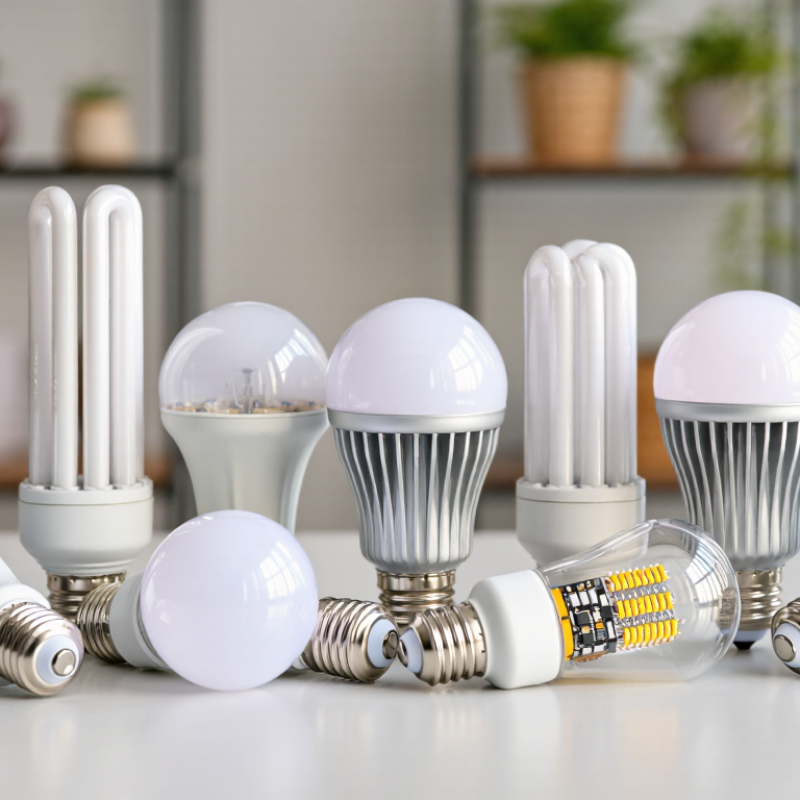
In China, a safe light bulb needs more than a bright showroom sample. The China Compulsory Certification, or CCC, is essential for products within China’s mandatory catalog. The CQC Mark can provide additional evidence of product quality. CE supports access to European markets, while RoHS controls restricted substances. These marks do not mean the same thing.
Other useful credentials include EMC testing, CB Scheme certification, ISO 9001, ISO 14001, LM-80, and TM-21. EMC testing checks whether a bulb disturbs nearby devices. CB reports can simplify international safety recognition. ISO 9001 examines quality systems, not one bulb. LM-80 and TM-21 are performance methods, not certifications. That difference is often missed.
Check the certificate number, testing laboratory, rated voltage, power factor, and photometric file. A reliable supplier should show test dates and model consistency.
The International Energy Agency reports that lighting uses about 15% of global electricity. The U.S. Department of Energy reports that LED bulbs can use at least 75% less energy than incandescent bulbs and last up to 25 times longer.
Certifications support these claims, but they cannot repair poor heat sinking, loose wiring, or exaggerated lifetime figures.
A certificate is evidence, not a guarantee.
I would still request samples and inspect them after continuous operation. Five hours is revealing.
China’s China Compulsory Certification, or CCC, is a key safety requirement for many electrical products sold in China. For light bulbs, buyers should confirm whether the exact product category falls within the current CCC certification scope. Not every lamp follows identical rules. The catalog and applicable standards matter.
A compliant bulb should carry a clear CCC mark, certificate information, model number, rated voltage, power, and manufacturer details. These details should match the packaging, product label, and test documents. During a receiving inspection, compare the certificate model with the physical bulb. A small model difference can signal a serious documentation problem. Check the base, housing, wiring, and insulation for cracks, loose parts, or unusual heat marks. Safety begins with details.
CCC certification involves product testing and factory quality assessments. It is not simply a printed logo. Certificate status may change, so buyers should verify current information through official certification channels. Ask for test reports, certification records, and relevant technical files before placing a large order. Be careful with copied certificates. They often look convincing. I have found that visual checks alone are not enough, especially when packaging is changed between batches. One practical weakness remains: many buyers check compliance only after shipment. That timing is expensive and avoidable. A stronger process links certificate verification, sample testing, and production inspection before payment.
| No. | Certification or Compliance Credential | Status in China | Typical Applicable Products | Main Safety or Performance Basis | Why It Matters | Typical Evidence |
|---|---|---|---|---|---|---|
| 1 | China Compulsory Certification (CCC) | Mandatory for products within the applicable CCC catalogue | Applicable self-ballasted LED lamps, lighting appliances and other listed lighting products | Applicable CCC implementation rules and relevant GB safety, insulation, temperature-rise and construction requirements | Confirms that a covered product has completed China’s required conformity-assessment process before market circulation | Valid CCC certificate, certification information and correctly applied CCC mark |
| 2 | CQC Mark Certification | Voluntary certification unless a specific procurement or market requirement applies | LED lamps, luminaires and other lighting products covered by applicable CQC schemes | Relevant CQC technical specifications and applicable Chinese GB or industry standards | Provides an additional, independently assessed indication of safety, quality or performance | CQC certificate, test report and authorized certification mark information |
| 3 | China Energy Label Registration | Mandatory registration and labeling for products included in the energy-label product catalogue | Applicable LED lamps and other lighting products covered by current energy-efficiency requirements | Current energy-efficiency limits, test methods and label implementation rules | Allows purchasers to compare energy efficiency and helps demonstrate declared performance | Energy-label filing or registration record and compliant energy-efficiency label |
| 4 | China RoHS Compliance | Mandatory information-disclosure and restricted-substance compliance framework for applicable electrical and electronic products | Electronic control gear, LED lamps and other electrical or electronic lighting products | Restricted-substance limits and marking requirements under China’s electrical and electronic product pollution-control rules | Supports safer material selection, regulatory transparency and responsible product disposal | Supplier declarations, material declarations, laboratory reports and compliant environmental-use-period marking |
| 5 | EMC Compliance Testing | Required as part of applicable product conformity assessment; not generally a standalone certification mark | LED bulbs with electronic drivers, switching power supplies or control circuits | GB/T 17743 for radio disturbance characteristics and GB 17625.1 for harmonic current emissions, where applicable | Helps limit electromagnetic interference and confirms acceptable compatibility with electrical networks and nearby equipment | Accredited laboratory EMC test report and technical compliance file |
| 6 | Electrical Safety and Photobiological Safety Testing | Required testing under the applicable product certification or market-access route | LED bulbs, self-ballasted lamps and luminaires with integrated LED modules | Applicable GB lighting-safety standards, including requirements for electric shock, abnormal operation, fire risk, UV and blue-light-related hazards | Assesses hazards that may not be visible during normal operation, including overheating and excessive optical radiation | Safety test report, risk assessment and product technical documentation |
| 7 | IECEE CB Scheme Certificate | International voluntary certification; does not replace CCC when CCC is legally required | Electrical and electronic lighting products intended for multiple international markets | Applicable IEC safety standards for lamps, control gear and luminaires | Facilitates the use of one internationally recognized test report when applying for national certifications | CB test certificate and associated CB test report issued through an approved national certification body |
| 8 | CE Marking | Required for applicable products placed on the European Economic Area market; not a Chinese certification | LED lamps and lighting equipment exported to the European Economic Area | Applicable European Union requirements for electrical safety, EMC, RoHS and ecodesign or energy labeling, where relevant | Supports legal market access in Europe and demonstrates that the manufacturer has completed the relevant conformity procedure | EU Declaration of Conformity, technical file, test reports and correctly used CE marking |
| 9 | UKCA Marking | Required for applicable products placed on the Great Britain market under current UK rules | Electrical lighting products exported to England, Scotland or Wales | Applicable UK electrical safety, EMC, RoHS and energy-efficiency regulations | Helps satisfy market-access requirements for Great Britain when the product falls within the relevant regulations | UK Declaration of Conformity, technical documentation, test reports and UKCA marking where required |
| 10 | SAA Approval or Applicable National Market Approval | Required or commonly requested for applicable lighting products in Australia and New Zealand; not a Chinese certification | LED lamps, luminaires, drivers and power supplies exported to Australia or New Zealand | Applicable Australian and New Zealand electrical safety, EMC and energy-efficiency requirements | Provides evidence that the product has been assessed for the destination market’s electrical and regulatory requirements | Approval certificate, registration record, test reports and compliant product marking |
Note: The exact certification route depends on the lamp type, rated voltage, product construction, intended market and the latest applicable Chinese regulations or product catalogue. CCC requirements take priority whenever the product is included in the current CCC scope.
Energy efficiency labels are among the most important credentials for light bulbs sold in China. The China Energy Label shows a product’s efficiency grade, energy consumption, rated power, and useful performance information. Grade 1 generally represents the highest efficiency level. Buyers can compare two 9-watt bulbs by checking their lumens, not wattage alone.
The International Energy Agency reported in its 2023 Energy Efficiency report that lighting accounts for about 15% of global electricity consumption. Better labels can turn an abstract saving into a visible choice. A clear label on the package helps purchasers estimate operating costs before installation. Look closely. Testing conditions still matter.
China Energy Conservation Certification is different from the mandatory energy label. It is a voluntary certification based on applicable national standards and certification rules. Certification bodies review technical documents, laboratory test results, and production controls. For LED products, requirements may reference standards such as GB 30255, which addresses energy efficiency limits and testing methods. The China Quality Certification Centre describes energy-conservation certification as evidence that products meet defined technical and management requirements.
In practical purchasing, check the certification scope, report date, rated lifetime, color-rendering index, and lumen maintenance. A bulb claiming 1,000 hours of life should be assessed under stated test conditions. Real rooms include heat, voltage variation, and frequent switching. That is the uncomfortable detail: a certificate supports reliability, but it cannot predict every installation. Rechecking current standards remains necessary because efficiency grades and technical requirements can change.
For lighting products, RoHS compliance is more than a printed logo. It limits hazardous substances, including lead, mercury, cadmium, and certain flame retardants. These controls protect workers, households, and recycling systems. A reliable supplier should provide a valid declaration of conformity and supporting laboratory reports. The documents should identify the exact bulb model, materials, test dates, and applicable market. Vague paperwork deserves caution.
Environmental compliance also includes responsible packaging, energy efficiency, and end-of-life planning. Depending on the destination, buyers may need WEEE registration, REACH information, or energy-label documentation. These requirements are related, but they are not interchangeable. A bulb can pass one requirement and still need additional evidence. That detail is easy to miss. During product checks, inspectors should compare the report with the actual lamp, socket, driver, and packaging. Small changes can affect compliance.
Tips: Ask for recent test reports. Check the model number carefully. Request material declarations for plastic housings and solder. Keep purchase records and inspection photos. Do not rely on a certificate image alone. A certificate may be genuine but outdated. This is where many purchasing decisions become uncertain. Regular reviews are wiser than one-time approval. And yes, even experienced teams can overlook a changed component.
China Top 10 Certifications Good Light Bulbs Should Have?
A dependable light bulb needs more than a bright package claim. EMC certification helps control radio interference from switching circuits and drivers. Look for testing against CISPR 15 and IEC 61547, especially when bulbs operate near routers or audio equipment. Electrical safety usually references IEC 62560, covering insulation, heating, creepage, and abnormal operation. A small laboratory report should show measured voltage, power, and temperature. Details matter.
Performance evidence should include lumen output, color temperature, color rendering, power factor, and lifetime testing. IEC 62612, LM-79, and LM-80-related reports can support these claims, although they measure different aspects. The U.S. Department of Energy reports that LED products use at least 75% less energy than incandescent lamps and can last up to 25 times longer. The IEA’s Energy Efficiency 2023 report also identifies lighting as roughly 15% of global electricity demand. That makes honest efficiency data important.
For Chinese exports, buyers may also check CCC, China RoHS, CE, CB Scheme, and market-specific safety marks. RoHS documentation helps verify restricted substances, while ISO/IEC 17025 accreditation strengthens laboratory credibility. A certificate is not a magic shield. I would still compare test dates, sample models, and laboratory scope. Some reports look impressive but omit flicker, surge endurance, or thermal ageing. That gap deserves attention.
EMC, quality, safety, environmental, energy-efficiency, and photobiological requirements for light bulbs vary by destination market. The chart shows the number of primary compliance areas addressed by each certification, regulation, or technical standard.
This is a scope comparison, not a quality ranking. CE and UKCA are conformity marks rather than standalone product certificates, while RoHS, REACH, FCC Part 15, and IEC 62471 address specific compliance areas. Applicable requirements depend on the target country, product design, voltage, and sales channel.
Request mandatory-market certification, safety reports, restricted-substance declarations, and recent laboratory records. The model number must match. Also check voltage, power factor, and test dates.
It shows that covered bulbs meet required safety rules in that market. It does not prove perfect brightness or long service life. A certificate is evidence, not a guarantee.
Check the certificate number, laboratory, model, voltage, power factor, and issue date. Compare every detail with the physical sample. Details matter. One overlooked model suffix can create uncertainty.
It controls substances such as lead, mercury, cadmium, and selected flame retardants. Ask for material declarations and laboratory reports. A printed logo is not enough.
No. They evaluate performance changes during testing. They do not replace electrical safety certification. This distinction is often missed.
They check whether a bulb disturbs nearby electronics or reacts poorly to electrical conditions. This matters near routers, monitors, and control equipment. The test is practical.
Inspect the lamp, socket, driver, wiring, heat sink, and packaging. Operate samples continuously for several hours. Five hours can be revealing. I would still inspect them afterward.
Efficient bulbs can use much less electricity and last longer than older designs. Actual results depend on heat control, components, and operating conditions. Be cautious with impressive lifetime figures. Not always accurate.
It evaluates factory processes, records, and consistency. It does not approve every individual bulb. A changed component may escape attention. Even experienced teams miss this sometimes.
Buyers may need waste-handling registration, chemical information, or energy-label documents. These requirements are related, but not interchangeable. A bulb can satisfy one requirement and still need another.
Choosing safe and reliable lighting products requires more than checking brightness or appearance. What certifications should good light bulbs have? In China, reputable bulbs should meet China Compulsory Certification (CCC) requirements, demonstrating compliance with essential safety standards for electrical products. They should also carry accurate energy-efficiency labeling and may qualify for China Energy Conservation Certification, helping consumers identify products designed to reduce power consumption and operating costs.
Environmental and performance considerations are equally important. RoHS compliance indicates that the bulb limits the use of certain hazardous substances, while EMC certification or testing helps ensure that it neither causes unacceptable electromagnetic interference nor is easily affected by surrounding equipment. Additional quality and performance certifications can verify factors such as electrical safety, durability, light stability, rated lifetime, power accuracy, and consistency in operation. Together, these certifications and test results provide a practical framework for evaluating light bulbs that are safer, more efficient, environmentally responsible, and dependable for everyday use.
