Sass Lighting
Sass Lighting
Sass Lighting
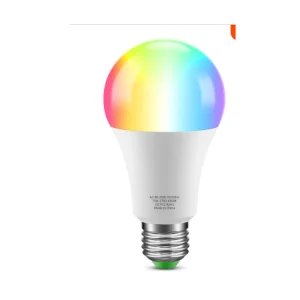
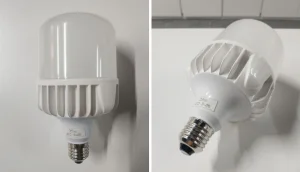
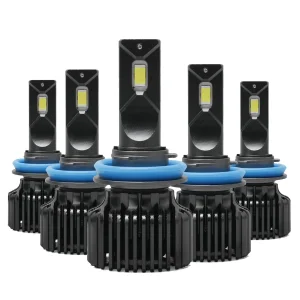
The global lighting landscape is undergoing a critical transformation. Driven by systemic pushes for carbon neutrality, resource optimization, and decentralized energy access, industrial buyers are searching for more than just hardware. They require partnerships built on verified operational capability, technical compliance, and structural agility.
Jiangsu Sass Lighting Technology Co., Ltd. is a leading China Solar Bollard Light Outdoor manufacturer and Modern Solar Bollard Lamp supplier. In close technical alignment, Ningbo Guangji Lighting Technology Co., Ltd., located in Cixi, Zhejiang province, specializes in the research, development, production, and sales of cutting-edge LED lighting products, providing professional indoor and outdoor lighting solutions to markets globally.
Guided by the core principles of Green, Energy-Saving, Eco-Friendly, and Technology, our combined operations employ advanced semi-automated assembly, high-precision surface-mount technology (SMT) lines, and a dedicated team of engineers to develop stable, high-efficiency, and distinctive LED products. Looking ahead, we are committed to the vision of "Enjoying an Energy-Saving Future."

Our experienced R&D team works closely with you to bring your ideas to life. Whether you provide blueprints or samples, we develop products that match your specifications with precision and thoughtful design.

As a direct manufacturer with our own workshop and warehouse, we streamline the supply chain. This allows us to offer factory-direct pricing while maintaining consistent product quality.

We operate advanced production lines and employ a strict quality control system, supported by rigorous testing equipment. Our ISO 9001 certification reflects our commitment to meeting recognized international standards.
With over 13 years of export experience, we specialize in providing reliable OEM and ODM services. Our customers are primarily based in Europe, the Americas, and the Asia-Pacific region.

We focus on building lasting partnerships with our clients by offering dedicated technical support and responsive after-sales service.

We specialize in the mid-to-high-end market, delivering products that meet international recognition. Our primary export destinations include Europe, the United States, Japan, and South Korea.
The landscape of portable LED design has moved past basic energy conservation. Modern architectures demand advanced electro-optical conversion, high thermal dissipation metrics, and native smart protocol integration. The core driver of performance in high-output portable environments is the implementation of Surface Mount Device (SMT) technologies, particularly ceramic-substrate high-density SMD LEDs.
By mounting chips onto specialized metal-clad printed circuit boards (MCPCB) backed by T-shape aluminum frameworks, modern manufacturers achieve significantly lower thermal resistance values. This translates to prolonged lumen maintenance curves, ensuring that emergency, work, and portable lights retain high output even under harsh thermal load conditions.
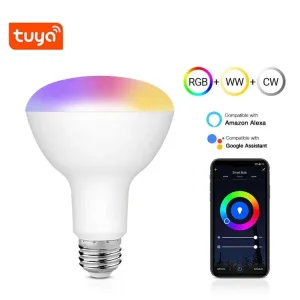
The intersection of portable hardware with smart control architectures has established new performance metrics. By utilizing Bluetooth Mesh, Zigbee, and Wi-Fi SoC (System on Chip) microcontrollers directly embedded within smart bulbs, modern LED products achieve seamless dynamic dimming, programmable CCT (Correlated Color Temperature), and RGB spectral modulation.
B2B procurement agencies face complex decisions when sourcing portable lighting systems. Standard consumer benchmarks are insufficient for industrial, hazardous, or extreme-outdoor environments. Key considerations include:
| Certification / Protocol | Primary Target Markets | Technical Focus Area | Compliance Value |
|---|---|---|---|
| CE & RoHS | European Union (EU) | Safety & Chemical Restrictions | Guarantees absence of hazardous substances; permits legal import. |
| UKCA | United Kingdom | Local Electrical Safety Standards | Validates structural and components safety compliance post-Brexit. |
| ErP (Energy-Related Products) | Europe & Global | Ecological Design & Efficiency Limits | Validates directional light values, CCT stability, and energy classes. |
| EMC & LVD Directives | Global Standards | Electrostatic Discharge & High-Voltage safety | Ensures no radio interference and safe operational margins up to 1000V. |
The shift toward green infrastructure has accelerated the development of integrated solar bollard systems. In architectural landscaping and remote commercial pathways, modern solar bollards combine photovoltaic modules directly with high-performance lithium iron phosphate (LiFePO4) energy storage and smart MPPT (Maximum Power Point Tracking) charge controllers.
Jiangsu Sass Lighting Technology Co., Ltd. has pioneered the integration of high-transmission tempered glass optics with monocrystalline silicon panels. By optimizing the solar energy collection angles, these modern solar bollard lamps maintain consistent illumination profiles even in high-latitude environments during winter months.
As the industry advances toward 2030, several technical transformations are shaping the product development roadmaps of leading LED manufacturers:
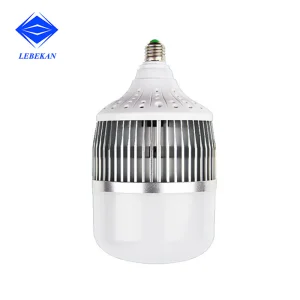
In high-wattage components, such as our 150W Corn Light Bulbs, heat dissipation dictates longevity. By engineering convective hollow cores through extruded T-shape aluminum columns, our designs bypass active cooling fans. This reduces structural fail-points and ensures silent, maintenance-free operations over a 50,000-hour operational lifespan.